
Guv suspends gas use tax again, plus excise tax; Trump follows?
Governor Mike Braun (R) has unilaterally extended his gasoline use tax holiday for another 30 days – and expanded his order to include the state’s 36¢ gasoline excise tax – moving Indiana more into a debate over whether the state should temporarily sacrifice road revenue to continue to soften the blow of high fuel prices amid the continued conflict with Iran.
The new gubernatorial order, which lasts through June 7, continues the suspension of Indiana’s 7.0% gasoline use tax, which is roughly 23¢ per gallon for May, and, for the first time by a governor, adds the gasoline excise tax.
Together, the suspended taxes are expected to save drivers about 59¢ per gallon if the full amount is reflected at the pump. The Governor’s Office calculates the combined suspension amounts to a 12.4% discount on the average price of gasoline in Indiana.
“You’ve heard me say it many times, the affordability issue is, I think the most important thing if you’re not listening, you’re not paying attention,” Governor Braun asserted during a May 6 press conference (a day after Indiana’s primary election). “Hoosiers still need relief from high gas prices.”
As of Wednesday, a week after Gov. Braun extended the holiday, prices are trending down in Indiana but are still well above $4 across the state. The average price per gallon of gas in Indiana is $4.283, according to AAA, below the national average of $4.511. IN Fuel Watch, run by the office of Attorney General Todd Rokita (R), reports the average gas price in the state is also around $4.30 – down from the $4.746/gallon price point on May 6 when the Governor extended the suspension.
Bloomberg reported this week that Midwestern states, including Indiana and our neighbors Ohio, Illinois, Michigan, and Wisconsin, have “borne the brunt of price hikes since the war began 10 weeks ago.” Gas prices in Indiana have increased by nearly $2 per gallon since the war with Iran began, between February 27 and May 2. The Hoosier State falls just below Ohio, which experienced the highest surge of $2.05.
The Governor’s use tax holiday extension and new suspension of the excise tax carry the tax holiday to the end of the Governor’s emergency declaration and hit the limit of what he can do without lawmakers. “Another extension would require a special legislative session,” he reminded reporters last week.
We informed you in our most recent issue that the June gas use tax rate is trending to reach a record high, maybe hitting 31¢, should retail prices remain on the current trajectory. That again would mean a massive sticker shock after June 7, when the use tax and excise tax go back into effect, each potentially above 30¢ per gallon.
Do legislative leaders have an appetite to return for a special session this summer to give Hoosiers further relief? They haven’t entirely shut the door on the possibility . . . but no concrete discussions have happened yet.
Leaders are tapdancing around any special session talk – torn between the optics of a special session just a few months before the general election and the reality of election backlash if gas prices and affordability concerns are at the top of the agenda of voters come September when voters begin to vote via absentee ballots.
Senate President Pro Tem Rodric Bray (R) of Martinsville, when speaking to reporters Tuesday, did not rule out the possibility. He also did not commit to his members being willing to return for session this summer either.
“We … haven’t had that conversation with the Governor yet, but certainly would,” Sen. Bray divulged. But, he added, “My hope is that we get some of these things going on around the globe smoothed out a little bit, and those gas prices … start to lower on their own.”
The pro tem concluded, “That would be the best circumstance. But, we’ll certainly have that conversation.”
House Committee on Ways and Means Chair Jeff Thompson (R) of Lizton also told the Indiana Capital Chronicle’s Leslie Bonilla Muñiz on the subject that, “There’ve been some discussions, but nothing … major.”
On Wednesday, when speaking to reporters, Gov. Braun did not rule out calling a special session to extend the gas tax holiday – a slightly more concrete answer than he’s given in the past. But any such dialogue is still in the early stages. “That would happen if, in fact, both chambers were willing to do it, and at this stage of the game, there’s not been a discussion on it,” he said.
Last week, the Governor stated he had not asked legislative leaders to prepare for a special session, but the temperature may be changing now.
Gov. Braun’s latest extension of the gas tax suspension places Indiana among a small group of states moving to provide relief from gas taxes as fuel prices climb. Reuters reported Monday that Kentucky and Georgia have also moved to make cuts to give consumers relief at the pump. Indiana was the second state to take action when Gov. Braun first began the tax holiday in April.
While we may not be collecting any tax from gas sales, we could be selling more of it because of inaction from our neighboring states.
“Chicagoans flock to Indiana for cheaper gas prices,” headlines a WBBM-TV CBS Chicago news story on Monday. “Amid rising gas prices, some Chicago area motorists are already finding a little relief, but not in the city. They’re driving to Indiana, where there’s been a big drop in prices in the past week. Some stations are priced at $4.59,” the station reports.
When Illinois Gov. JB Pritzker (D-IL) was asked last month about a suspension similar to that of Indiana, “Pritzker said he would contemplate it, but expressed concern about the impact.” “Uh, very important to me, though, that we make sure and balance all of the broader inflation questions and the question of whether or not we’re gonna continue to build the roads and the bridges and the airports and the river ports that are funded by the motor fuel assessment,” he said …. CBS News Chicago has reached out to Governor Braun’s office to see how the state will recoup the money, but has not yet heard back.”
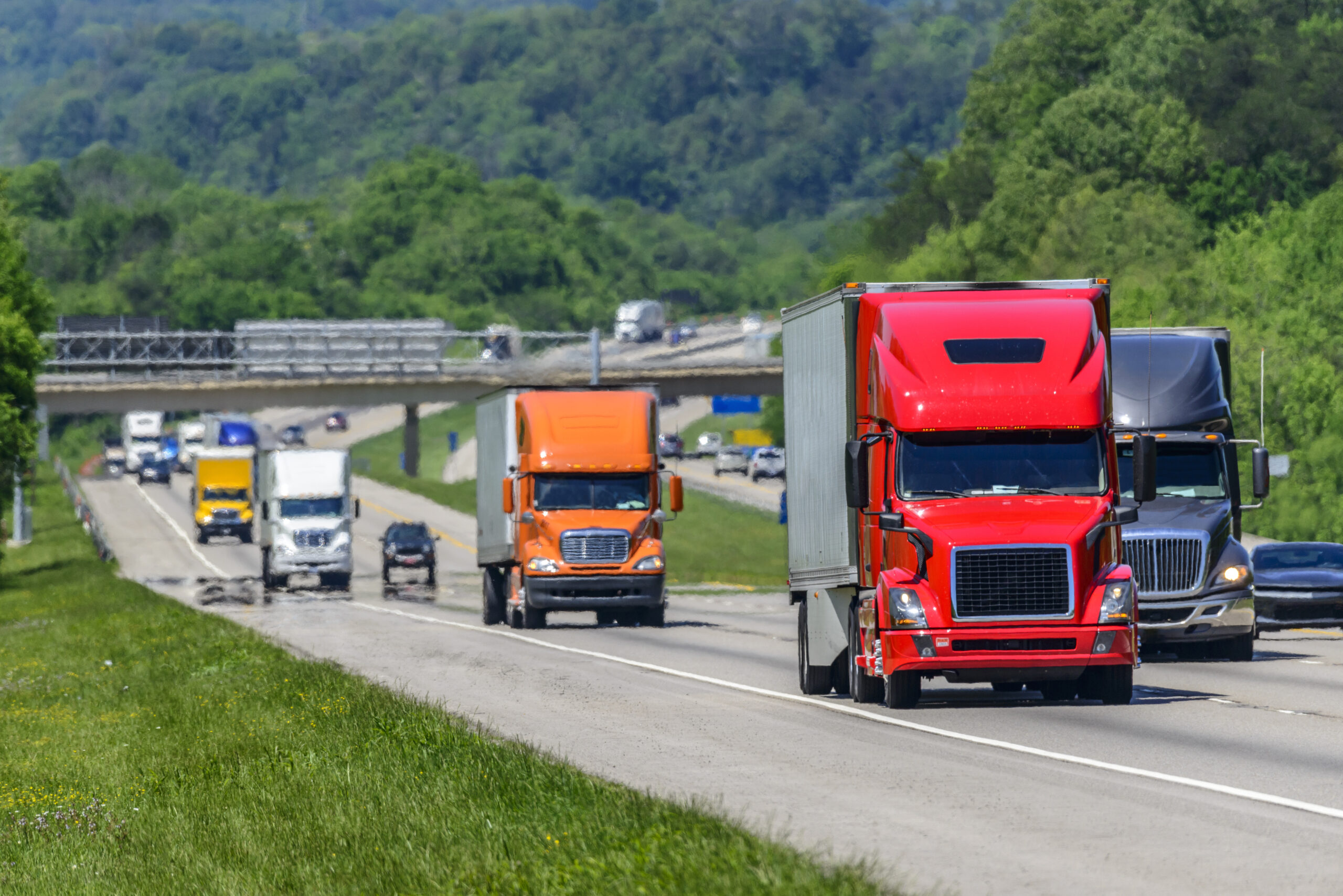
There is also concern from truckers as diesel fuel costs mount. One year ago, according to AAA, statewide average diesel prices in the Hoosier State were $3.56 per gallon. On Wednesday, that had jumped by 73.43% to $6.174 per gallon.
GasBuddy’s Patrick De Haan posted on social media that diesel fuel prices hit all-time highs this week in Indiana and these Midwestern states:
Indiana $6.174/gal
Michigan $6.198/gal
Illinois $6.148/gal
Wisconsin $5.882/gal
Ohio $6.126/gal
Word has caught on in Washington, where President Donald Trump (R) informed reporters this week that he is open to reducing the 18.4¢ federal gasoline tax as prices rise due to the Iran war and as further negotiations have stalled.
“Yeah, I’m going to reduce,” the President told reporters Monday. Asked how long he would suspend the tax, Trump stated in the Oval Office, “’til it’s appropriate.”
Suspending the federal tax would require congressional action. U.S. Sen. Josh Hawley (R-MO) announced he would introduce legislation to suspend both the 18.4¢ gasoline tax and the 24.4¢ diesel tax for 90 days. Some Democrats, including U.S. Sen. Mark Kelly (D-AZ) had already proposed suspending the federal gas tax until October, according to Reuters . . . yet Beltway trade publications remain somewhat skeptical about ultimate congressional approval.
”The timeframe and those numbers are still being negotiated,” U.S. Rep. André Carson (D), a member of the House Committee on Transportation and Infrastructure tells State House reporter Hannah Adamson of WXIN-TV Fox 59 in Indianapolis when asked about a tentative vote – and how long a suspension could last. “There’s a bipartisan pathway here – we should take it.” “It most likely would start with 30 days,” U.S. Rep. Marlin Stutzman (R). “I think it’ll be a short-term situation.” Rep. Stutzman “also expressed openness to suspending the federal gas tax on the condition that Congress maintains adequate road funding. ‘I sit on the Budget Committee, so we’ll have those conversations fairly quickly,’ Rep. Stutzman said. ‘Repaving and filling potholes and the infrastructure needs that we have that continue to grow because of a strong economy – we want to make sure that we have the funding there to take care of that.’ ”
One major concern: a 2022 Congressional Research Service study found that it is difficult to ensure any gas tax savings would be passed along to consumers. The federal tax is collected at the terminal or refinery, and not at the pump as part of a retail purchase.
Reuters reports that the federal gas tax generates about $2.5 billion per month for road funding. Since 2008, more than $275 billion, including $118 billion from the 2021 infrastructure law, has been shifted from the general fund to help pay for road repairs. Note that the Highway Trust Fund is already underfunded, given that the federal gas tax hasn’t been increased since 1993.
Back Home, the Governor again assured no current road or infrastructure projects are being delayed because of the suspension. He points out Indiana has benefited from higher revenue collections when prices were elevated and has reserves within the Indiana Department of Transportation.
“When we were collecting higher revenues, we’ve benefited from that. So that offsets some of this,” Gov. Braun states.
April General Fund revenue collections totaled $283.7 million for the month, putting collections $425.7 million above the fiscal year-to-date forecast.
Per the Governor’s Office, a 30-day extension of the gasoline use tax suspension from May 8 to June 7 is estimated to affect $46.3 million in INDOT revenue and $17 million in local revenue. Suspending the excise tax for 30 days is estimated to affect another $58.2 million for INDOT and $35.3 million for locals.
Revenue from the use tax is distributed across multiple transportation accounts: 4.286% is directed to the motor vehicle highway account, 21.429% flows to the local road and bridge matching grant fund, and 64.285% is devoted to the state highway fund.
The excise tax is also collected by distributors from retailers, not imposed as a retail-level tax at the pump, and the rate increases annually based on factors outlined in state statute. Under the state’s distribution formula, the first $70 million ends up in the state highway road construction and improvement fund. Taxes collected from fuel delivered to marine facilities are dedicated to the fish and wildlife fund. Of the remaining amount, 25% goes to the highway, road, and street fund, while the remainder finds its way into the motor fuel tax fund within the motor vehicle highway account.
Combined, the 30-day suspension of both taxes results in an estimated $104.5 million impact to INDOT and $52.3 million to local units, or about $156.8 million in total road-related revenue.
The Governor’s Office notes that INDOT continuously adjusts infrastructure programming to the agency’s estimated revenue forecast, and that its FY 2026-27 appropriations were based on the full revenue forecast, so an augmentation is not necessary.
However, Gov. Braun also acknowledged that the bigger problem is not the next 30 days – it is the future of road funding in Indiana itself.
“The biggest issue with INDOT is not now, it’s how we’re going to road fund in the future,” the Governor informed reporters. He pointed to Indiana’s 2017 road funding law, saying the current revenue source was expected to flatten and then “slightly wane year after year.”
Again, that is a big reason why we are seeing the Braun Administration move more toward exploring tolls as a new revenue resource to undertake particularly large road projects going forward.
Looking forward, the state’s chief executive at his May 6 press conference warned that larger projects could be stretched out unless lawmakers approve a new long-term plan.
“Any larger projects across the state, until we get another plan in place for long-term road funding will have to be probably stretched out and getting less done in the amount of time you would have wanted to do it in the past,” Gov. Braun detailed. He also said major projects may require cost-sharing from local beneficiaries.
Still, in the short term, gas tax revenue is a primary source for funding the Crossroads of America. The extra revenue carrying the suspensions now won’t last forever.
Once again, if gas prices fall, Gov. Braun can allow the emergency declaration to expire and frame the tax holiday as a temporary bridge through a price spike. If prices remain high, the same logic that justified the first two suspensions could fuel pressure for another extension – and that would probably force lawmakers to decide whether to continue the break, replace the lost revenue, or let the taxes return while drivers are still angry.
The national picture may only increase that pressure. If Congress moves on Trump’s federal gas tax proposal, Indiana drivers could see both state and federal taxes suspended at once.
Stay tuned as we get closer to the June 7 expiration date, especially if gas prices continue to near $5. Next week will be key as the Indiana Department of Revenue will release the June gas use tax rate . . . which could be the determining factor in deciding if a special session this summer is warranted.